
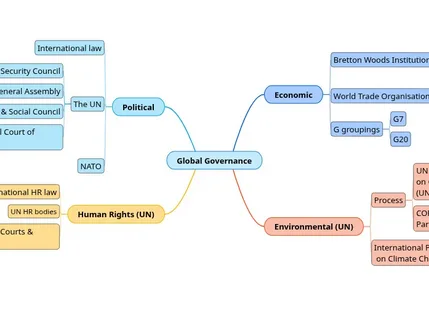
Global governance refers to the coordination of policies between nations to address challenges that extend beyond national borders. Issues such as climate change, economic stability, and international security require cooperation between governments and international institutions.
International organizations provide platforms where governments negotiate agreements and develop coordinated strategies. These institutions facilitate communication between countries and promote collective responses to complex global issues.
Trade agreements represent one form of global governance. Countries negotiate economic partnerships that regulate tariffs, intellectual property protections, and investment frameworks.
Environmental agreements also demonstrate the importance of international policy coordination. Governments collaborate on environmental protection initiatives designed to reduce emissions and preserve natural resources.
Technology has improved international policy coordination by enabling rapid communication between governments and policy institutions.
As globalization continues expanding economic and political connections between nations, international cooperation will remain essential for addressing shared challenges and promoting sustainable development.